 UX Caffè

AI and Design: How Artificial Intelligence Is Revolutionizing Creativity in 2025
Exploring how AI amplifies ideation, speeds up production, and transforms the creative process
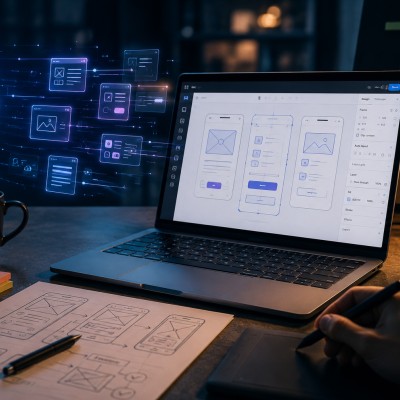
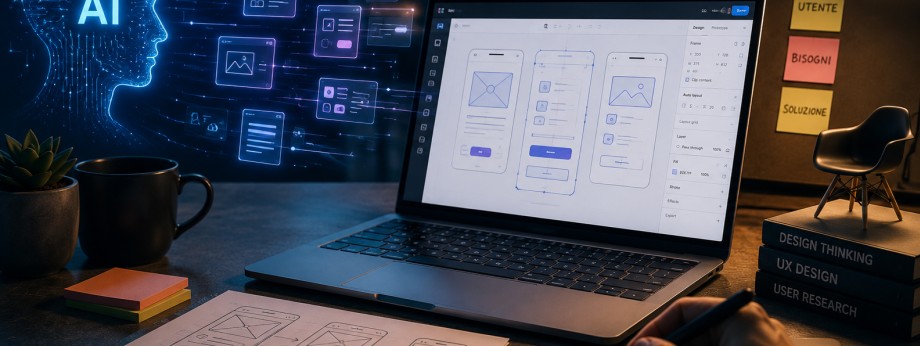
In 2025, AI design 2025 is no longer a buzzword—it’s the new paradigm reshaping every phase of the creative workflow. Artificial intelligence isn’t replacing designers: it’s empowering them, automating repetitive tasks and freeing up energy for true creativity. Let’s dive in.
1. AI as a creative partner during ideation
The most exciting stage of design? Generating ideas. This is where AI thrives:
- Tools like ChatGPT help create conceptual moodboards, write briefs, and explore stylistic variations.
- Academic projects such as AIdeation demonstrate how human-AI collaboration enhances early-stage visual concepts.
- Platforms like Inkspire bridge the gap between sketch and render, allowing visual flexibility and exploration.
In short: AI becomes an idea partner, unlocking creative thinking, suggesting new associations, and fueling divergent thinking.
2. Emerging tools: from image generation to prototyping
Powerful platforms are shaping the landscape:
- Adobe Firefly integrates generative fill, automatic video editing, and collaborative canvases for shared ideation.
- Midjourney, Recraft, and Ideogram are advancing text-to-image tools with brand-focused visual coherence.
- UX-focused tools like UXPin, Lollypop, and collections curated by Devlin Peck identify top AI tools (like Adobe Sensei, Uizard, Descript, Vance AI, Kittl) for automated mockups and prototypes.
3. Real-world examples transforming workflows
- Autodesk Flow Studio, launched at Cannes Lions 2025, shows how AI reduces manual tasks and enhances creative strategy.
- Google unveiled Stitch, a tool that turns conversational descriptions into UI and code—streamlining idea-to-interface processes.
- Microsoft’s Copilot and Sensei are bridging the gap between design and development with AI as a co-creator.
- In advertising, filmmakers like PJ Accetturo use Veo3 to cut costs and boost creative experimentation.
4. Challenges and critical reflections
While AI excites, it also raises concerns:
- Creative uniformity: Studies from MIT and Cornell highlight the risk of converging toward "average" ideas.
- Designer fatigue: Some visual artists, especially in China, warn against stylistic flattening.
- Legal and ethical issues: Lawsuits from Disney and Universal against Midjourney raise questions about copyright.
- Overreliance: Rapid output might reduce time for deep thought or intentional design.
5. Best practices: designing powerfully and consciously
- AI as co-designer — not a substitute. Keep the ideation human-led.
- Fast iteration — tools like Relume, Midjourney, and ChatGPT enable quick and refined prototypes.
- Tool integration — Firefly in Photoshop, Sensei in Adobe CC, and components in Figma/Webflow make a difference.
- Balance machine + human intelligence — it's about vision, feedback, empathy, and strategy.
- Legal awareness — understand training data, copyright, and usage terms.
- Creative mindfulness — protect space for divergent thinking. Don’t automate everything.
Conclusions
In 2025, talking about AI design means recognizing a deep shift: technology is becoming a powerful ally without replacing the human touch. The real revolution isn’t about automating everything but freeing human creativity for strategy, emotion, and vision.
The tools are highly advanced: Firefly for generation, Stitch for coding from prompts, Copilot for team collaboration. But the key differentiator is the thinking designer who uses AI as leverage—not as a crutch.
When used consciously, AI tools improve speed (up to 90% of creatives confirm this), allow rapid visual exploration, and enable true co-design. The sweet spot is where human intuition meets computational power.
The future is fluid collaboration: AI builds structures, generates layouts, automates patterns; the human designer adds meaning, style, context, empathy, and brand. This isn’t about creating sterile perfection, but expanding possibility.
That’s why in 2025, AI in design is not a threat but an opportunity—if we accompany it with:
- Ethical practices (copyright, privacy, transparency)
- Critical awareness (avoid bland outputs)
- Continuous learning (strategy + feedback loops)
- Cultural plurality (diverse data, global perspectives)
Striking this balance between automation and intention is the challenge—and promise—of modern design. Ready to collaborate with AI? It’ll be a creative, emotional, and wildly inspiring journey.
 Follow UX Caffe on instagram