 UX Caffè


From AI to Empathy: Why UX Design Can’t Ignore the Human Factor
Artificial intelligence is a powerful productivity booster, but only human intuition can create truly memorable experiences
The Age of AI in Design: An Accelerator, Not a Replacement
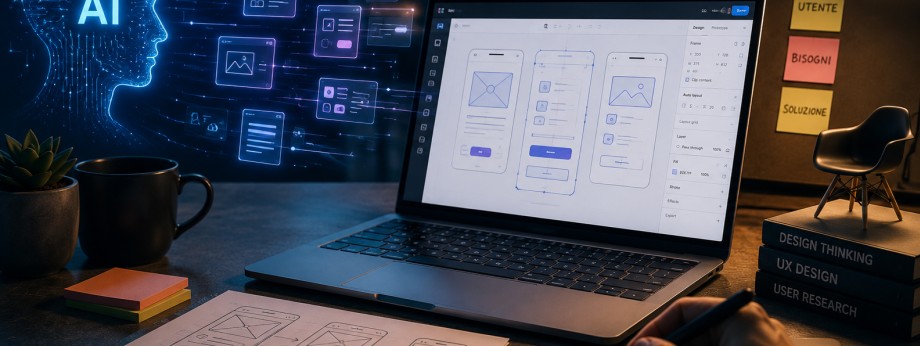
Over the past two years, generative artificial intelligence has taken the design world by storm. Tools like Figma AI, Uizard, Galileo AI, and Framer AI can automatically generate wireframes, layouts, and even interactive components from simple text prompts. UX copywriters use language models like ChatGPT to craft textual alternatives in seconds, while product teams leverage AI-driven data to personalize user experiences in real time.
Sounds exciting, right? And in many ways, it is.
But as technology advances, one key point becomes increasingly clear: creativity isn’t just about output—it’s about intention.
AI can generate something functional, but can it truly understand the why behind a well-crafted interface?
The risk lies in confusing speed with quality. If everything is automated, we might end up letting algorithms make decisions that require human sensitivity.
Why Empathy Is the Heart of UX Design
UX design is not a technical exercise—it’s an act of listening.
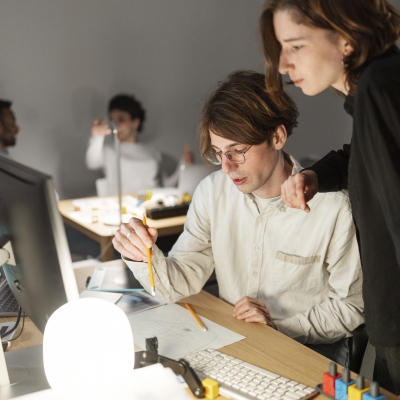
A good UX designer doesn’t just build interfaces; they build bridges between needs, contexts, and solutions.
And to do that, they rely on something no tool—no matter how smart—can simulate: empathy.
Putting yourself in the user’s shoes means far more than collecting quantitative data. It means:
- Understanding the context in which someone uses the product
- Recognizing frustrations, cognitive obstacles, habits, and expectations
- Evaluating the emotional impact of a microinteraction, notification, or feedback
For instance, someone designing a health monitoring app can’t rely on data alone—they have to consider how an anxious person might feel when reading a vague or alarming result.
And that kind of sensitivity isn’t (yet) programmable into any machine learning model.
What AI Does Well in Design
This doesn’t mean AI doesn’t belong in the creative process—quite the opposite.
It’s already an essential ally for reducing designers’ cognitive load, freeing up time for more strategic thinking.
Here are some areas where AI truly excels:
- Predictive data analysis: AI can detect user behavior patterns that humans might miss, such as which actions lead to funnel drop-off.
- Automated content creation: from writing onboarding microcopy to generating A/B variants for conversion testing.
- Intelligent personalization: dynamically adapting layouts, colors, or CTAs based on user preferences and behavior enhances usability and engagement.
- Accelerated prototyping: AI tools can turn sketches or written prompts into working prototypes in seconds, drastically cutting down early-stage development time.
- Improved accessibility: some tools can automatically flag poor contrast or suggest alt text for screen readers.
AI is a powerful tool for automating repetitive tasks and expanding creative possibilities—but it must be guided by a human-centered vision.
Designer Intuition: An Irreplaceable Asset
Intuition isn’t magic—it’s built through experience. It’s the ability to connect seemingly unrelated elements, anticipate user needs, and find solutions that work not just logically, but intuitively.
A good UX designer knows how to:
- Spot insights in subtle signals (a pause during a user interview, hesitation in interaction)
- Recognize cultural biases that affect interface perception
- Adapt communication style based on the use context
And most importantly: a designer knows when to follow the data—and when to trust their gut.
The real value doesn’t lie in producing ten interface variants—it’s in knowing which one is right for the people who will actually use it.
Conclusion
Artificial intelligence is transforming how we work in UX design, and it would be shortsighted not to embrace tools that help us streamline workflows, reduce human error, and uncover hidden insights.
But automation is not the ultimate goal of design.
At the core of every meaningful user experience is still a genuine relationship with the end user. That requires empathy, active listening, contextual interpretation, and the ability to make nuanced, uncertain decisions—things that, at least for now, remain uniquely human.
AI gives us new possibilities, but we must orchestrate them intentionally.
Designing for people means more than “following the algorithm”—it means asking the right questions, observing the world, and creating meaningful connections.
In the near future, the designer’s value won’t lie in how quickly they can execute (AI already does that). It will lie in their ability to give human meaning to increasingly complex products.
In a world obsessed with artificial intelligence, empathy will be the true differentiator.
 Follow UX Caffe on instagram